


The Challenge:
A heavy-duty truck manufacturer came to a third-party logistics provider (3PL) with a unique challenge. Faced with upcoming changes to tail-pipe-emissions regulations, the auto company was under the gun to complete manufacturing of a fleet of semi-trucks before time ran out on the old federal standards.
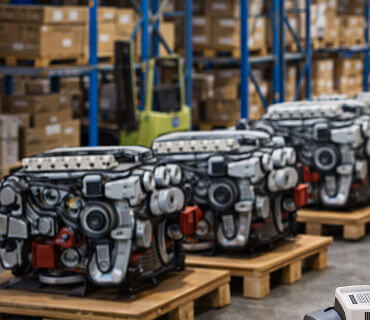
With the clock ticking, company had 17,000 massive truck engines, each of them already assembled, mounted to a stand and bolted to a pallet, that needed to be swiftly warehoused. Soon after, the engines had to be shipped to their respective destinations, on time and in the correct sequence, for installation into semi-trucks.
The operational demands were unusually complex:
- Each engine was tied to a specific, fixed job number.
- Engines arrived in batches but were later requested for delivery in different batches and sequences.
- Outbound shipments had to be reverse-sequenced to feed them directly into the manufacturer’s production line in the desired order.
- Given the engines’ considerable size, storage would quickly overflow across multiple warehouse sections.